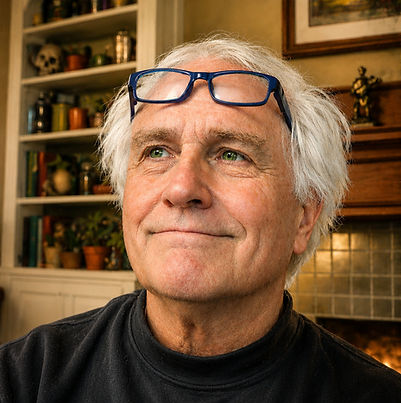
J. Michael McGee
Writer - Author
_edited.jpg)
From an Interview with J. Michael McGee

Before he began writing novels, J. Michael McGee spent years listening.
As a court investigator, he interviewed people accused and convicted of crimes, learning how events unfolded and how people explained their actions. Later, as a mental health therapist in a prison, he worked with men facing the consequences of those decisions.
“That kind of experience stays with you,” McGee said. “You don’t forget the way people talk, or the way they think through what they’ve done.”
His interest in crime began long before his career. Growing up in Columbia, McGee lived across the street from a house where a young girl was murdered. The case was never solved, and the unanswered questions stayed with him.
“That was something you didn’t forget,” he said.
He went on to spend 15 years working in the criminal justice system, gaining firsthand insight into how crimes happen and how people live with them afterward.
Over time, those experiences began to shape something else: his writing.
McGee is the author of the Pat Riordan mystery series, including Bricked, The Slip Swing and The Cues. The series grew out of his time teaching at-risk students in Columbia, combining his interest in education with crime and investigation.
His most recent novel, Franklin's Bennies, follows a prison mental-health counselor navigating ethical boundaries when a situation extends beyond the prison.
Rather than focusing on action, McGee’s work centers on decision-making — how people respond when the right choice isn’t clear.
“Most situations aren’t clearly right or wrong,” he said. “People are making decisions with incomplete information.”
His path to writing included work in journalism and education, where he wrote for the Branson Daily News and taught at both the college and secondary levels.
Today, McGee continues to write while working as a Licensed Professional Counselor, specializing in obsessive-compulsive disorder.
For him, writing is not separate from his earlier work, but a continuation of it.
“I spent years listening to other people’s stories,” he said. “This is a way of making sense of them.”